
“The conference room is filling up, and I start to get nervous as the moderator introduces me—not because I am about to speak to hundreds of fellow veterinarians, which I love to do, but because I fear I will be considered a fraud. I start thinking of all the things I do not know and become paranoid that someone will ask me something that stumps me or I do not feel qualified to answer. I have to force myself to change the direction of my thoughts before I fall apart. I do know what I am talking about, I am good at what I do, and if there is something I do not know, it is okay. After all, everyone is here to learn! I begin my presentation and before I know it, 50 minutes have passed and I can hear applause.”
Mary Gardner, DVM. Lap of Love. 2017
You may have felt like this at either some point in your career or all of the time. I fall into the latter. It was found that two out of five veterinary professionals have felt like this during their time in the field (Wagle. 2017). It may be cliché to say, but you are not alone.
Imposter syndrome was first defined by psychologists Pauline Rose Clancy and Suzanne Imes in 1978. Their definition was “The condition of feeling anxious and not experiencing success internally, despite being high performing in external, objective ways, causing the individual to feel like a fraud or phony.”
Essentially, imposter syndrome causes an individual to feel like they are not good enough or doing good enough to receive praise and/or feel like they do not belong among their peers. ‘Attribution theory’ works by placing the success of something you have done in external forces, anything but you, while also taking blame for failures, even if you were not directly related to them.
When I first heard the term imposture syndrome, I was at work, over hearing a conversation between our lead technician and an assistant. The assistant had felt like she was making progress, but that she should be further along in her training over the last year at this hospital. The technician asked her why she felt like she was not exceeding at her job even though we have all told her she is. The assistant simple shrugged. The technician then asked her if she had ever heard the term ‘imposter syndrome’.
Imposter syndrome is caused by the cognitive distortion and self-doubt in ones achievements, successes, or past victories. For some, this starts in early childhood. Maybe your parents always seemed to down-played your achievements, only focusing on what you could have done better, instead of the accomplishment itself. For others, these feeling arise later in life, and often at the start of a demanding and/or competitive field of work.
After looking up what the term meant and how, at first, it resonated with me so much, I thought I had finally found what the road block had been in my work satisfaction. Then, the little sabotage voice in my head said ‘but you are not good enough to have imposter syndrome. That is only for those who are good at their jobs, but cannot recognize it.’ Little did I know at the time, that it was in fact the essence of the condition.
Not to sound like I am the best of the best and am just being modest. Imposter syndrome goes beyond humility, as the individual cannot even acknowledge their success where someone with humility can, but remains humble about it. The first step to moving past this condition is to acknowledges its existence. But first, let’s discuss what exactly imposture syndrome looks like.Someone with imposter syndrome has a feeling of not knowing enough or doing enough in their field of work, to the extent that they feel like they do not belong there and will be ‘discovered’ as inadequate. In turn, this causes feelings of self-doubt, self-judgement, lack of motivation, anxiety, depression, burnout, and general feelings of not belonging. It can present differently in people, but some of the signs include:
- Micromanaging
- Perfectionism
- Obsessing about work
- Inability to take compliments
- Self-deprecation speech
- Difficulty working in groups
- Deflecting praise
- Trust issues, especially with co-workers
- Some level of paranoia
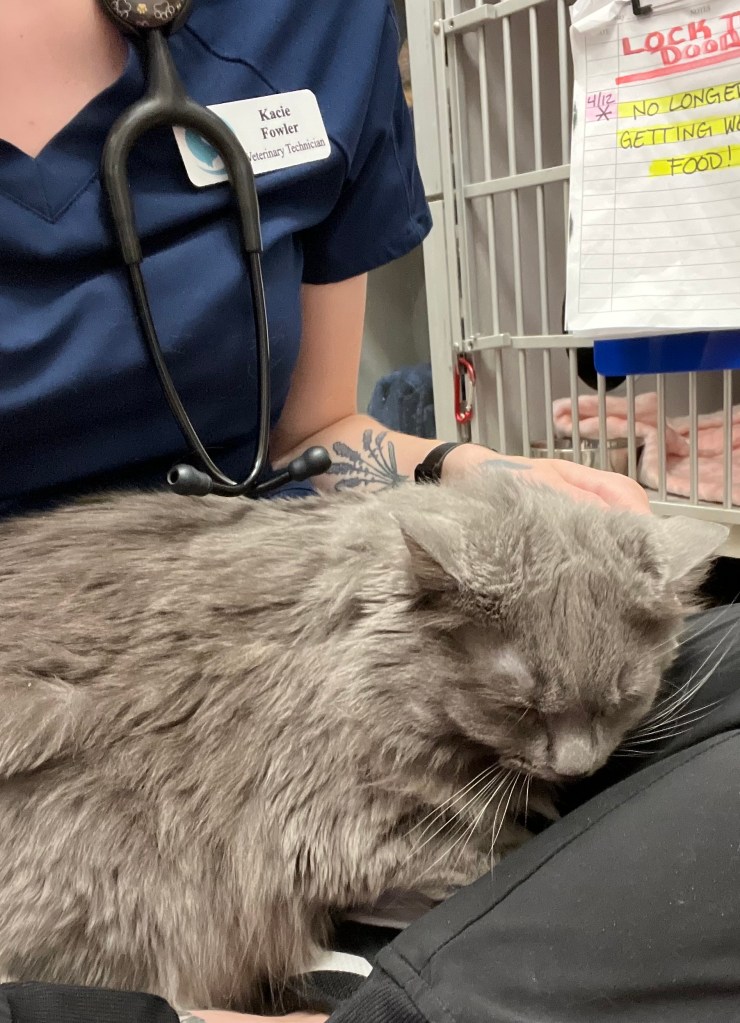
While imposter syndrome has found to be equal among men and women overall, it is more common in women specifically in the veterinary field. (Et al. 2020).
Types of Imposter Syndrome:
- The Noticer: an individual that finds it impossible to be proud of themselves or their work, for all they see are the flaws. They can easily forgive others mistakes but cannot extend that grace to themselves. They tend to have difficulty accepting compliments and celebrating their achievements. They are always trying to work on themselves, but are uncomfortable with the idea of sharing their feelings.
- The Discounter: someone who automatically rationalizes and displaces evidence of their good work. They do not value or trust their network of support to be honest in their work, thinking any compliment is the other person “ just being nice.” Think prime example of attribution theory.
- The Perfectionist: as it sounds, this is the individual who has to do everything “right” and anything less than their version of right is not good enough. An all or nothing mentality when it comes to their success. This stems from a fear of losing control. The Perfectionist often displays characteristics of micromanagement and pushing themselves to the breaking point to make things perfect.
- The Superperson: the type of person who feels they can only prove their worth by taking on more than anyone else, or a high level of work in a short period of time to show that they can. This comes from a fear of free time taking away from their success and fear of appearing to be a ‘slacker’ or ‘lazy’. They will often stay late, work outside of office hours, and work on future projects to get ahead and to avoid downtime.
- The Natural Genius: the type of person who needs to prove themselves by having a vast knowledge on a subject and getting their work done as quick as possible. The Natural Genius’ fear comes from not knowing or having the right answer and being “discovered” as an imposter. These individuals can come off as a know-it-all, but the behavior stems from anxiety of feeling unqualified and shame of failing or not knowing. They will avoiding work or projects that they do not know about and sometimes will not give it their all, because knowing if they do, it still may not be enough.
- The Soloist: like the Natural Genius, the Soloist not only needs to do the work on their own to prove themselves, but fully resents others entirely. They tend to not a good team player as they feel they do not need anyone else to prove their worth. Asking for help leaves them shameful and vulnerable and are often uncomfortable with showing progress updates. They may even resent people who offer them help as this feeds the feeling of not being good enough.
- The Expert: an individual that thinks they must have all the credentials and qualifications for a job/position/task before even attempting it. Often feeling that if they are not fully knowledgeable and prepared, then they will be “discovered” and subsequently failing. This type of fear of inadequacy leads to missed opportunities in the work place. They tend to have anxiety when some mentions how much they know about something, even in a positive manner. Sticking with what they know and looking how to advance within one specific area, instead of expanding on their field keeps them safe.
Imposter syndrome not only interferes with satisfaction in your career and work relationships, but has devastating mental health concerns as well. Never feeling like you are good enough at your job leads to a lack of motivation in your day-to-day activities and a constant sense of dread can consume thoughts about your position or the entire field you work within. For veterinary professions, we are very familiar with the phrase ‘burnout’. While there are several external factors that create burnout in the veterinary field, imposture syndrome is a top, internal cause.
Poor interpersonal communication arises from constant fear and lack of trust surrounding the thoughts and feedback from your coworkers. As well as the potential for a hostile work environment with the types that find it difficult or impossible working with others. For more information on the importance of interpersonal communication in the veterinary hospital, read my article here.
Increased anxiety and stress levels about your job and your worth causes depression and hopelessness, leading to burnout and leaving the field that you have worked so hard to be apart of. Now, do not panic if any of these types or combination of them sounds like you. If you truly feel that you may be suffering from imposter syndrome, there are ways to overcome.
- Acknowledge its existence and understand the signs that are specific to you.
- Talk with a trusted person who understands your situation. This may be a friend also in the veterinary field, a coworker, or best, someone in management.
- Acknowledge the sabotaging thoughts in the moment as they occur and take a pause to assessing the situation for what it really is.
- Find a way to let out the negative emotions in a healthy manner. This looks different for everyone, but try out therapy, talking with a trusted friend, journaling, or grounding exercises as a start.
- Take the praise as it comes and learn to celebrate your successes, even the small ones.
- Remember that “you’re part of an elite group of high-functioning individuals with scary goals” (Wagle. 2017) We are typically ‘the go getters’ and leaders; those who others, especially newbies, look to for guidance.
- You are not being judged for asking for help. Not asking questions or not asking for help can actually be what sets your back.

One caveat to this is if you are having the symptoms of imposter syndrome without the internalizing thoughts. This can be caused by outside influences and potential gaslighting from either co-workers or management. People telling you that you’re not good enough when you are, rather than you feel this on your own. If this is your situation, it is important that you can feel comfortable where you work and who you work with. Your mental health matters more than a job.
Thank you for reading! If you have any questions, feel free to leave it in the comments.
References:
Gardner, Mary. March 2016. Overcoming Imposter Syndrome. Clinician’s Brief. Retrieved on July 11th, 2023. https://www.cliniciansbrief.com/article/overcoming-impostor-syndrome
Griggs, Emma K.; Hellyer, Peter; Kogan, Lori R.; Kramer, Emily; Schoenfeld-Tacher, Regina. October 3rd, 2020. Veterinarians and Imposter Syndrome: An Exploratory Study. PubMed. Retrieved on July 11th, 2023. https://pubmed.ncbi.nlm.nih.gov/32571984/
Saymeh, Amal. February 22nd, 2023. What is Imposter Syndrome? Learn what it is and 10 ways to cope. BetterUp. Retrieved on July 11th, 2023. https://www.betterup.com/blog/what-is-imposter-syndrome-and-how-to-avoid-it#:~:text=Imposter%20syndrome%20is%20the%20condition,phony%22%20and%20doubting%20their%20abilities.
Veterinary IT Services. Imposter Syndrome in Veterinary Medicine. Retrieved on July 11th, 2023. https://veterinaryit.services/imposter-syndrome-in-veterinary-medicine/
Wagle, Hannah. October 24th, 2017. Imposter Syndrome: Overcoming your psychological glass ceiling. DVM360. Retrieved on July 11th, 2023. https://www.dvm360.com/view/impostor-syndrome-overcoming-your-psychological-glass-ceiling
 Write. Read. Repeat.
Leave a comment