By Kacie Fowler
This was an APA-style assignment from my Communications 101 class and also a bit about my trip to Japan (that came at the perfect time if we are honest). The assignment asked that we describe an encounter we had with a person and/or group from a culture that we are not from, how the interaction(s) went, and module tie-ins, and what we learned from the experience. I like most of our assignments for I get to not only apply what I learned, but I also get to stretch my writing muscles. I like topic-writing and find that I am looking for more writing assignments that bring in topics that I never thought I would write about and get more experience out of it. Got 100% on this, but let me know what you think in the comments.
Table of Contents
Interactions and Observations. 5
The cultures and traditions of each country is different than our own and each of our experience are uniquely individual. When visiting a foreign country, it is of not only social integrity, but respect, that we should first research, understand, and carryout in terms of the communicative norms of that country. This not only helps us to assimilate within a different culture but helps to give us insight into the history behind their communicative norms. The theories we have learned about can only be effective in our life when we put them to practical use. The following is a rendition of my recent trip to Japan and how I exercised my knowledge of communication studies to better understand the social life of the Japanese.
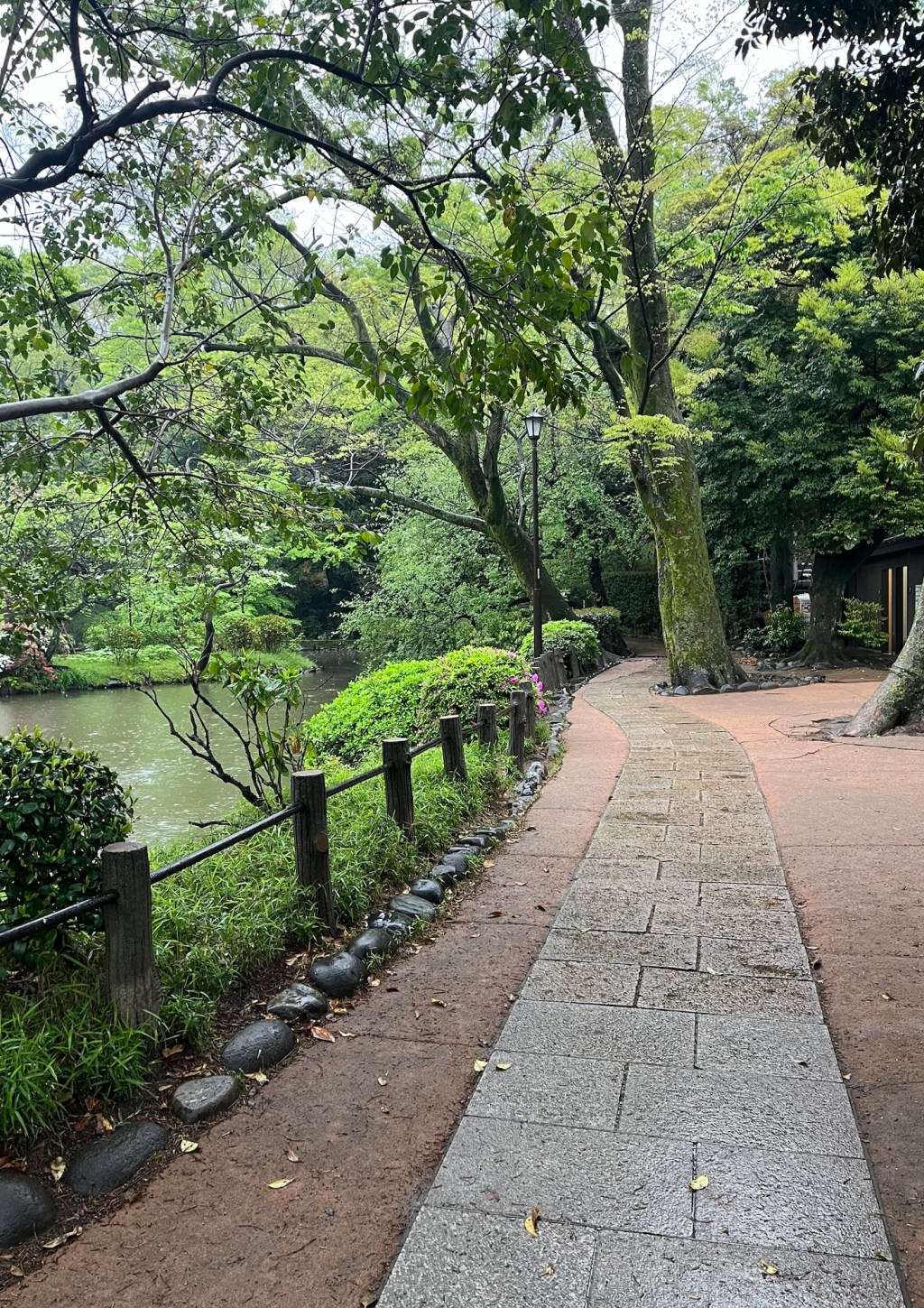
After my husband got ‘volun-told’ military orders to Japan unexpectedly, there was a time of shock, anger, and frustration (not at him), but then the part of me that strives for optimism kicked in and we saw this as an excellent chance to explore this beautiful country and its people. While he has been stationed there just over a year, I was fortunate enough to visit Japan at the end of last month, and it was more phenomenal than I could have ever hoped for.
The Research
Respect is a value I hold very personally. I not only want to be shown it, but I ensure that I demonstrate it to others as well. As I had never been to Japan, let alone any Asian country, I knew there was work to be done in researching their culture, social norms, and communication styles. Let’s begin however, with the varying definitions of what ‘culture’ actually entails.
Some will state that “culture is a system of shared patterns of behaviors and interactions” while others believe it to more of “a set of ideologies that drive the construction of realities” (Newsom & Montenegro, 2024). My own personal definition of culture is more of a collection of our thoughts, values, and traditions, shaped by our past experiences, relative to how we conduct ourselves and perform our identities. In all three definitions, culture is learned and expressed via communication with those around us.
Verbal communication creates the majority of the context of our interactions and serves to deliver our message. If you have ever taken a look at the intricate Japanese language, you know that as a foreigner, verbal communication would probably be the highest point of struggle when visiting. As we have learned, however, the majority of communication occurs non-verbally and thus, this is where I began.
“Successful intercultural communication starts with cultural awareness” is a statement I believe in wholeheartedly (Newsom, Montenegro, 2024). There are numerous ways to go about studying a culture; most may say that historical and scholarly articles will guarantee the most accurate representation of the demographic for a country, but as we were there to explore the sites, food, and minute intricacies of Japan, I instead turned to social media. After consuming hours of ‘vlogs’ and inner thoughts of Japan’s young adults, I began to pick up on common themes in mannerisms, body language, and the general social do’s and do not’s. I learned a few key phrases and their applicable uses and set off.
While I would love to say that I am not someone who only believes in stereotypes, it is an unchangeable fact that we all hold our own biases, whether they are conscious or not. As, “relying on stereotypes to guide our communication practices means we aren’t really trying to understand the other person, and this is likely to lead to communication failure” I worked to wipe away any of those thoughts I may have formed over my life and keep my mind open (Newsom & Montenegro, 2024). While I have grown up with friends from various Asian countries and frequent those authentic restaurants, I feel you can never really get a sense for who a collective group of people are until you immerse yourself in their world.
Interactions and Observations
We visited two major cities, Tokyo and Osaka as well as two smaller towns, Nara and Kyoto. While parallels followed through between each city, respectfully, part of what had me continuously observing and learning was the differences between the social norms of large city versus small towns and how those came to be.
One of the major differences between American culture and Japanese culture is the overall sense of politeness and calming atmosphere. Every direct interaction we had whether at a hotel, restaurant, or store register, there was nothing but friendliness and hospitality. As soon as you enter or leave a store, there is a shower of welcomes and thanks. While we have some degree of this in America, it does not even compare to how often and enthusiastic the Japanese carry it out. We did catch a good many looks being two taller than average white people there, but this enthusiasm was directed toward everyone equally despite their appearance. It made me think back to Stella Ting-Toomey’s face negotiation model, which was specifically conducted to compare the US and Japan and found how Japan is a collectivist-based culture (Newsom & Montenegro, 2024). It made me wonder how this display of what I would think many Americans would call ‘over friendliness’ (depending on your region) may have been a way to save face. I took a look inside myself and my own anxieties to see that I was most fearful during interactions with native Japanese speakers of messing up or accidentally insulting them. I could then theorize that perhaps they felt the same way about having ‘broken’ or no English language skills. Reinstating the notation that while our cultures are uniquely our own, there are similarities, such as the fear of failure and embarrassment of not knowing. To compensate, both them and I presented ourselves as highly apologetic and appreciative of letting the little mistakes slide, reinforcing our similarities.
The whole atmosphere was overall peaceful. They keep their cities immaculately clean, people look out for one another, young children walk themselves to school, and you can safely roam the streets late at night without the fear of violence. Even public transportation held its own social norms, and some even had announcements of remembering your manners to ensure everyone had a comfortable passage. There is exception to ever rule with this of course, but it was the little nuances of how people conducted themselves that I began to see the personalities within.
We primarily walked or took a train around and here is where I found the next major difference between American culture and Japanese. Some have seen the videos of the ‘pushers’, who are transportation workers who literally push people onto trains during rush hour because they are so full, but to see this and be in it was a different story. We quickly learned what time to not take the train at to avoid such close quarters, but even during the slower times, proper train etiquette was glaringly obvious.
It is not illegal by any means to talk while on the train, but you would stick out like a sore thumb if you spoke in anything but a low whisper, or forbid, where on the phone. You would be quite literally pushed up against one another, but if you spoke anything but an ‘excuse me’ when it was your station to depart at, you could see the unspoken ‘rude foreigner’ look from those around you. The juxtaposition of the tightly packed trains to the personal space allowance above ground was shocking. Perhaps it was my tattoos (a whole communications research paper could be written about having tattoos in Japan), but everyone seemed to give a wide birth to each other on the street. This got me thinking back to Hall’s proxemics.
Hall’s proxemics look at how people of different cultures value the use of space differently and comparatively (Newsom & Montenegro, 2024). There are four types of spaces, intimate, personal, social, and public and while we will all have different comfort zones with each, that is something you have to get over if you find yourself on trains in Japan (Newsom & Montenegro, 2024). There are set distances for each of the group types, and though it is not that the Japanese do not care about their personal space, it may again be more of a toleration in order to save face.
Challenges and Regrets
There were a number of challenges for me on this trip, veganism and having a lot of tattoos being the top two, but there is nothing more that I regret than not having the courage to try and communicate more with the Japanese than I did. Most of my conversations were brief and involved checking out or ordering food, and they were almost all in English except for greetings and thanks. The longest conversation I had with a native Japanese speaker was at a small restaurant in Kyoto where the chef was the only employee (and owner in this case) and he spoke pretty good English. The place was set up similar to teppanyaki, but the whole kitchen was right in front of you. There were only eight stools surrounding the chef and he made a point to interact with us all to some degree, no matter the language barrier. There were times of mistranslations or misunderstandings, but we all laughed them off and had a good time. I wish I had taken a bit more time to learn some longer phrases and conversation words as this would have been the best time to try it out and really learn about Japanese culture and traditions from a native.
Conclusion
Not only was this trip an amazing vacation, but the timing of it with this section of class really brought to my attention the importance of intercultural communication as well as being aware of what the different theories we have learned look like in practice. I was honored to have been fortunate enough to visit a culturally unique country and do my best to follow along their social norms. It was a wonderful experience, and I learned many things about their way of life I have taken home with me. I think with a bit of language practice and knowing what I know now of intercultural communication, the next visit will be even more spectacular.
Mental Health First Aid USA. (Jul 22, 2019). Five Ways to be More Culturally Aware.
Mental Health First Aid USA. [Web Page]. https://www.mentalhealthfirstaid.org/2019/07/five-ways-to-be-more-culturally-aware/
Newsom, V., & Montenegro, M. (2024). 5.1 Communication and Culture. [Web Page]. https://olympic.instructure.com/courses/2475745/pages/5-dot-1-communication-and-culture?module_item_id=83071399B
Newsom, V., & Montenegro, M. (2024). 5.2 Intercultural Communication. [Web Page]. https://olympic.instructure.com/courses/2475745/pages/5-dot-2-intercultural-communication-and-the-foreign-service-institute?module_item_id=83071400
 Write. Read. Repeat.
Leave a comment