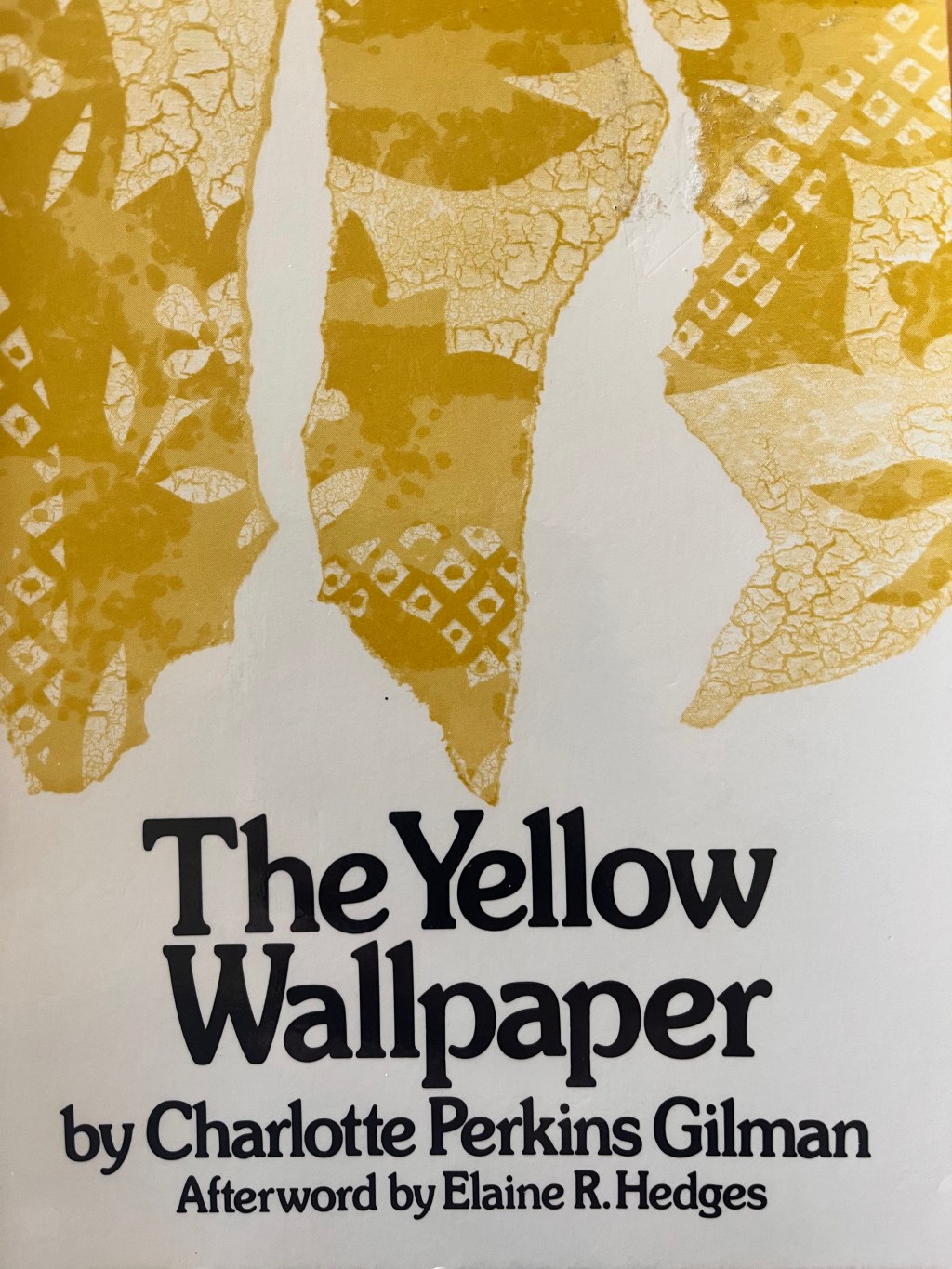
This comparison and synthesis essay of The Yellow Wallpaper by Charlotte Perkins Gilman and My Last Duchess by Robert Browning was assigned during a 2024 college English Class. All ideas and text below is my own intellectual property unless directly cited.
The Linear Theme of Narcissistic Men in The Yellow Wallpaper and My Last Duchess
While there are a few themes to take away from both The Yellow Wallpaper by Charlotte Perkins Gilman and My Last Duchess by Robert Browning, the most notable and interesting of the parallels between the two is the exemplification of the narcissistic man in light of their treatment of women. Most people view theses stories as a descent into madness, but that was never an aspect I focused on. The Yellow Wallpaper has been a favorite short story of mine for many years and I have utilized it in a variety of ways, but one of my favorite uses for it is to show how men control their wives and women in their life in general. My Last Duchess, while new to me, follows similar tracks, but takes on the added aspect of the narrative coming from the point of view of the man.
Within the confines of The Yellow Wallpaper, Gilman employed several literary devices that enhance the atmosphere of a haunting room lending itself as a propellant for our narrator’s fragile state of mind. This is a common theme in Gothic literature, as well as the damsel in distress main female role, which we can also see in this short story. As the story progresses, the reader begins to surmise that the narrator’s mental stability is waning, though I see this deterioration not on the basis of ‘hysteria’ or true mental illness, but that of her husband’s own creation via gaslighting and narcissistic, controlling behavior. I found the element of a woman trapped within the wallpaper to be an allegory for the narrator feeling trapped in her own life, due to her husband’s oppressive and dismissive nature. There are several examples throughout the story where the narrator speaks to hiding things from her husband, John, like her writing, and how she is afraid of him and does not tell him all that is occurring within her mind. There are strong elements of John gaslighting and control toward his wife through his ‘medical care’ and treatment of her supposed condition, as well as the lack of appreciation John had felt toward her when she asked for things to be changed and to leave the estate.
The theme of the narcissistic male under the terms discussed in The Yellow Wallpaper is also exemplifiable in My Last Duchess. The title alone works two-fold; by it, Ferrara is not only saying that the portrait being shown off was that of his last wife, but also that she was the last duchess, in the sense that his new wife will not be allowed the fancies that the previous had taken. Though his late wife is only a character in the story as a painting, it is the control of the painting that is the diagnostic means of the man’s narcissism. For he controlled who may see her portrait behind the curtain and thus, “she smiled, no doubt whene’er I passed her” eluding to the fact that he was the one to control to whom and when her painting (her smile) could be seen, and that she was only allowed to smile for him now and on his terms (2). This example of control would presumably come from the feeling of jealousy he had when she was alive, having so much male attention. His jealousy is also seen in the same stance as this attention, when he writes, “as if she ranked my gift of a nine-hundred-years-old name with anybody’s gift,” showing that he did not feel appreciated (2).
There is nothing more dangerous than a man of power who does not feel appreciated and both The Yellow Wallpaper and My Last Duchess are demonstrative of the devastating effects of that feeling. Both John and the Duke resented and controlled their wives, in life and to death, and serve to play keeper of their existence. There are unfortunately countless ways in which men control women’s bodies through literature and in the ‘real world’, but I find that dynamic among marriage to be the most interesting in terms of how the woman responds. These two text, though written some time ago, draw the parallel between their fear of a woman (in this case, their wife) succeeding in their own endeavors and the way it may affect the man’s status. The fear of loosing their control threatens them, and thus, their narcissistic demeanor festers, which is theme that is still all too common in modern times.
Works Cited
Browning, Robert. 1842. My Last Duchess. Poetry Foundation. https://www.poetryfoundation.org/poems/43768/my-last-duchess
Gilman, Charolette Perkins. 1892. The Yellow Wallpaper. Natural Library of Medicine.https://www.nlm.nih.gov/exhibition/theliteratureofprescription/exhibitionAssets/digitalDocs/The-Yellow-Wall-Paper.pdf
The best thing about the discussion of books is that they can happen anywhere by anyone. Let’s start a discourse about these two works int he comments below.
Thank you for reading.
K

 Everything With Nothing
Leave a comment